
Pizza dough tears when stretching? 4 causes and how to fix them
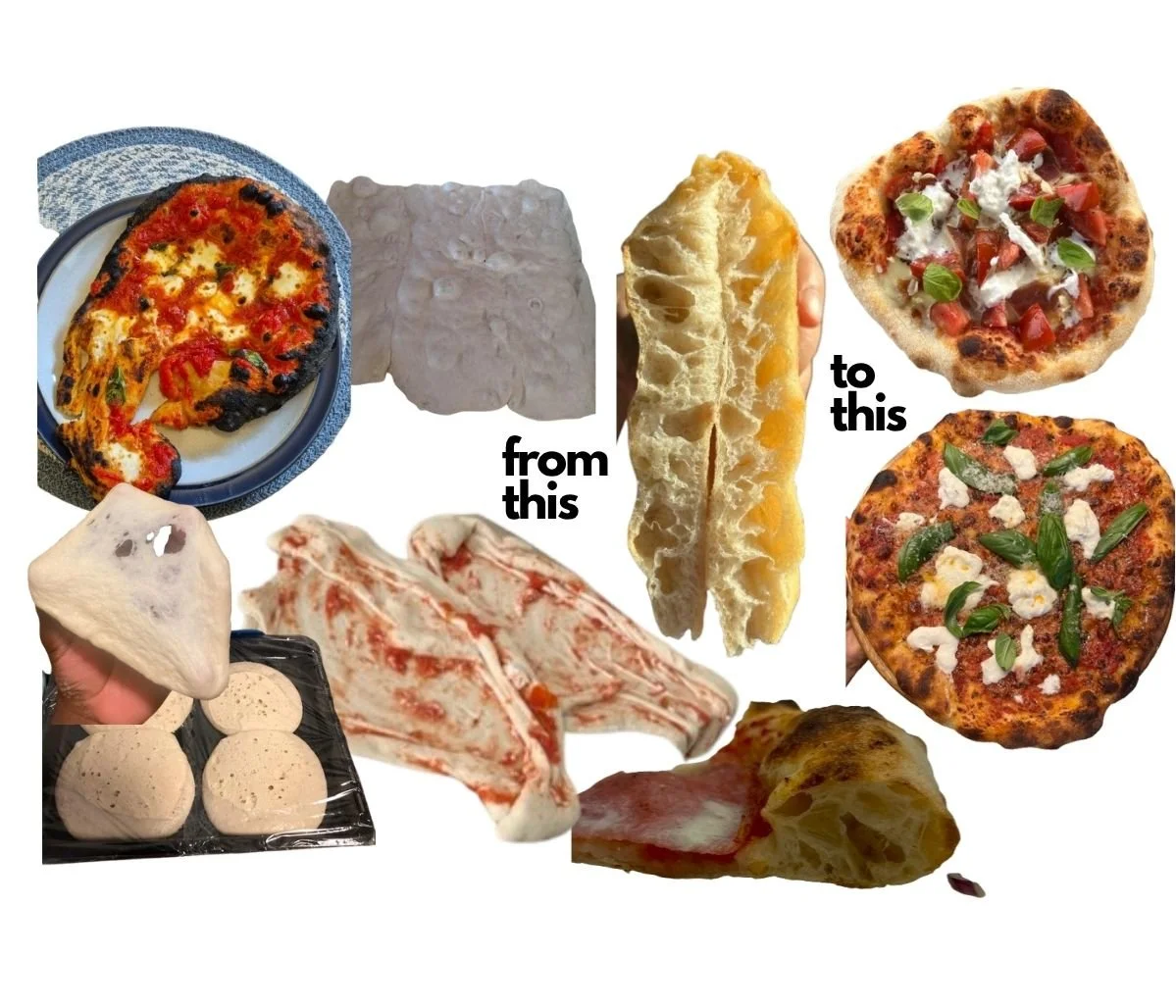
You start stretching, get a few inches in, and the dough opens a hole. Or it snaps back so hard you can't open it at all. Either way, pizza dough tears when stretching for a specific reason — and that reason determines the fix.
The frustrating part is that two of the four causes look almost identical from the outside but need completely opposite solutions. Get them confused, and you make things worse.
Here's how to tell them apart before you do anything else.
Why pizza dough tears when stretching: the short version
Dough stretches because gluten — the protein network that forms when flour meets water — holds tension. When that network isn't there yet, or when it's been damaged, the dough tears instead of stretching.
Four things cause this:
The dough is under-kneaded — gluten never fully formed
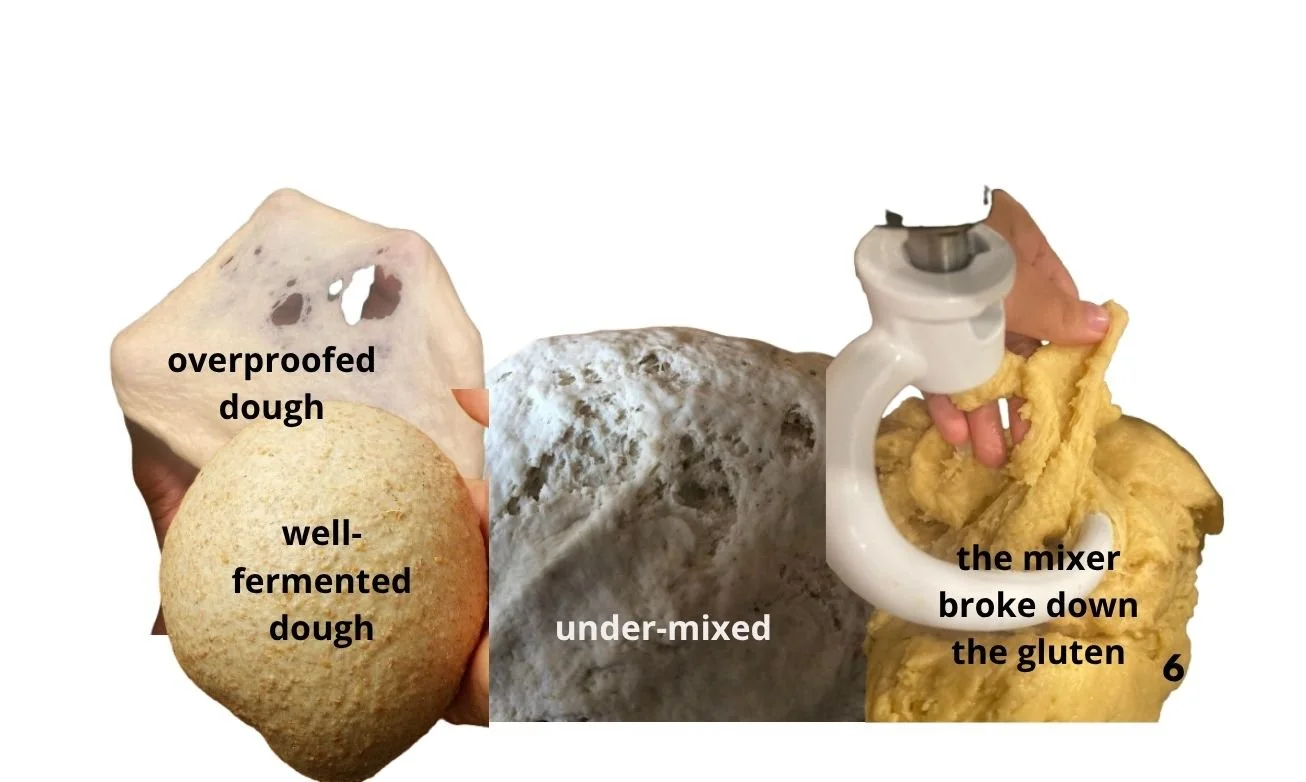
The dough is overproofed — gluten got too weak from fermentation
The flour isn't strong enough for your hydration and timing
The mixer overheated the dough and broke the structure
Before anything else, do this one check: does the dough feel tight and resistant — snapping back, hard to open — or soft and slack — spreading, sticking, tearing in weak spots?
Tight usually means under-kneaded or too cold. Slack usually means overproofed or overmixed. That split sends you to the right section immediately.
What "gluten not built yet" looks like
Under-kneaded dough has a very specific feel. It's not just sticky — it's structurally unfinished, like something that hasn't come together yet.
Signs:
rough, torn, shaggy surface
feels sticky and falls apart in your hands
tight in a useless way — rubbery, not elastic
no smooth skin, no tension
doesn't want to hold together as one piece
The instinct here is to change the recipe or add more flour. Resist that. The fix is to build strength first, not alter the formula.
If you want to bake pizza your family will actually ask for again — I'm opening a live online workshop in 2026. We go deep on how everything works: fermentation, flour, dough behavior, heat. You'll understand the process well enough to bake your favorite pizza style consistently, in your own oven.Join the waitlist →
Want the full details first? See the full Online Pizza Workshop for Home Ovens
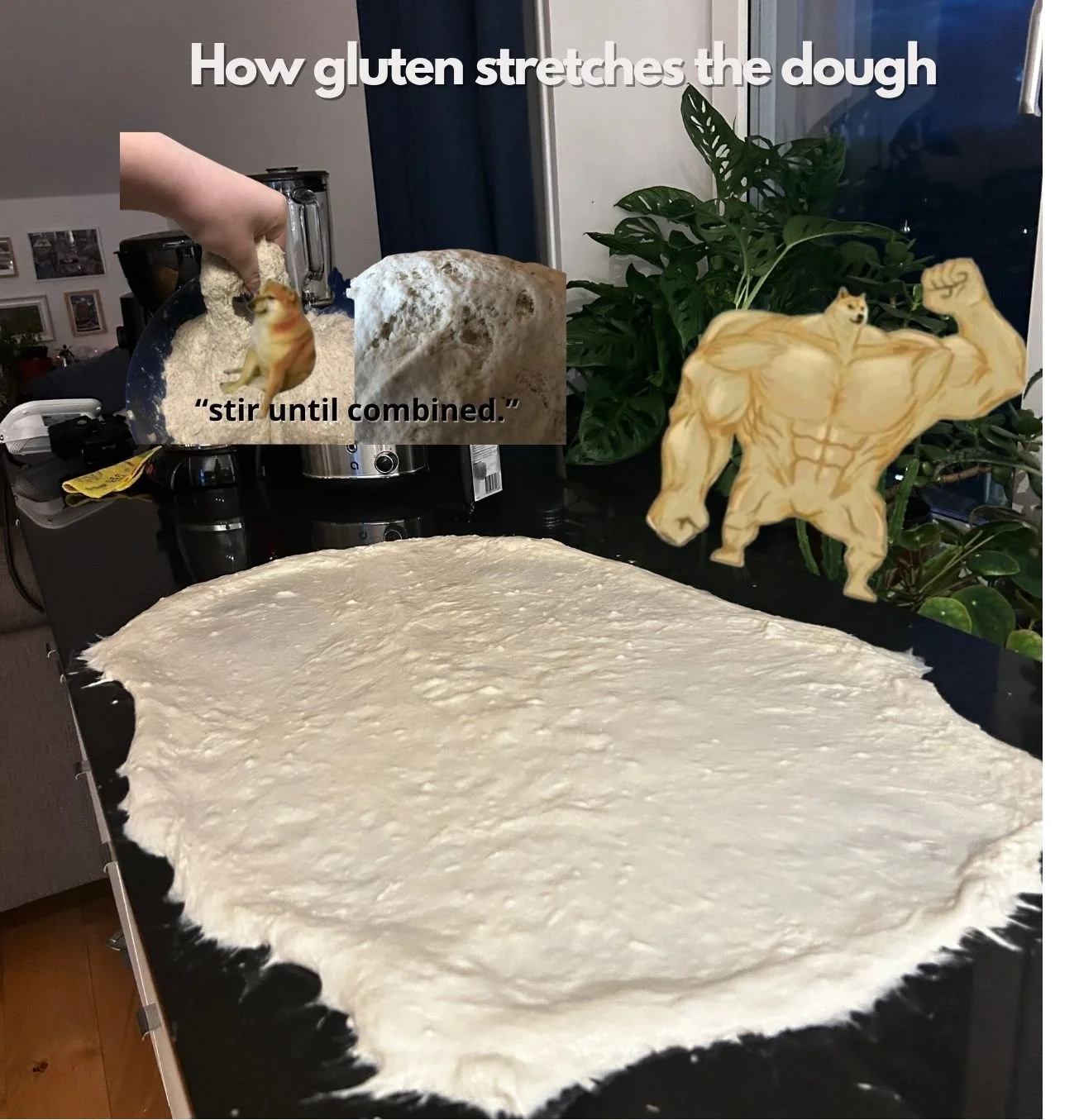
How gluten actually forms
Two things build gluten: time and physical work.
Time + water (absorption) — flour and water left alone change significantly. A 30-minute autolyse — mix flour and water, cover, walk away — and the dough is noticeably stronger when you come back. No kneading, no effort. The proteins just need time to hydrate fully.
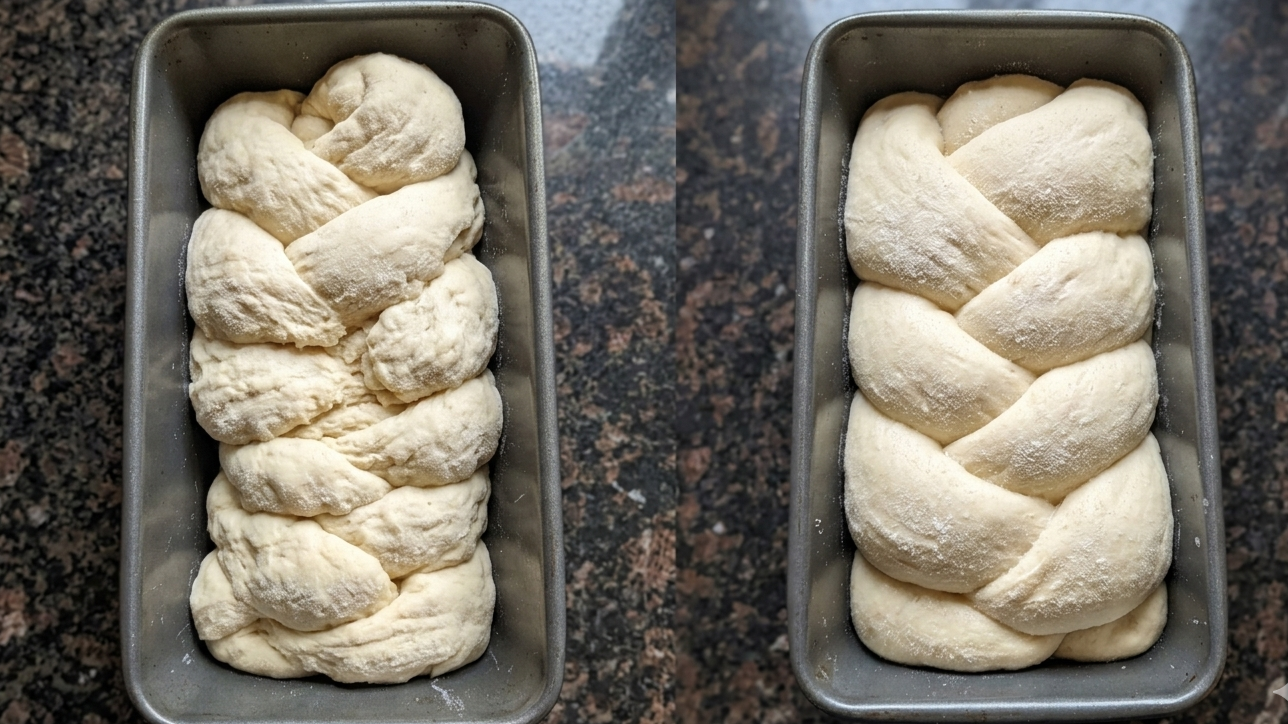
before and after autolise
Structure work — mixing, folds, lamination. The key word is deliberate. Think of it like working a piece of stiff leather: slow, steady pressure shapes it. Yanking it tears it. Slow, deliberate folding builds the gluten network without damaging what's already there. Most of the work is passive — fold once, rest, fold again.
Here's what changes as gluten builds:
dough goes from shredded mess to one cohesive piece
surface gets smoother
it starts to push back — resistance that feels elastic, not rubbery
it springs back instead of tearing
This is exactly why "mix for 8 minutes" fails people. Eight minutes in a warm kitchen with a powerful stand mixer is not the same as eight minutes by hand in a cool apartment. The timer means nothing. What matters is what the dough feels like.
How to fix under-kneaded dough
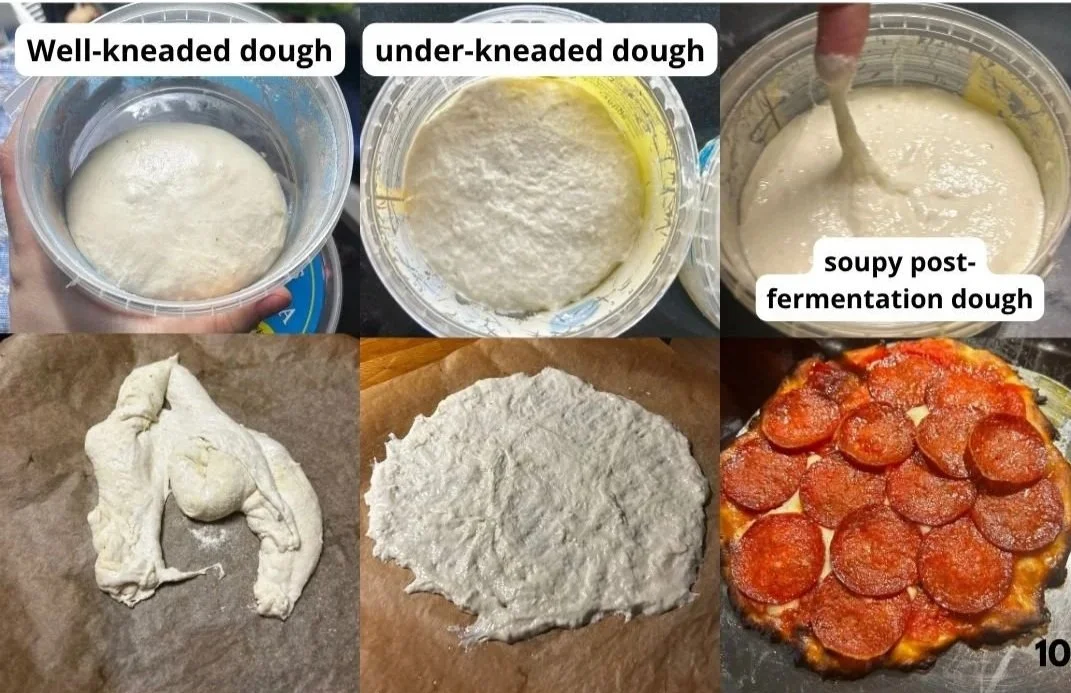
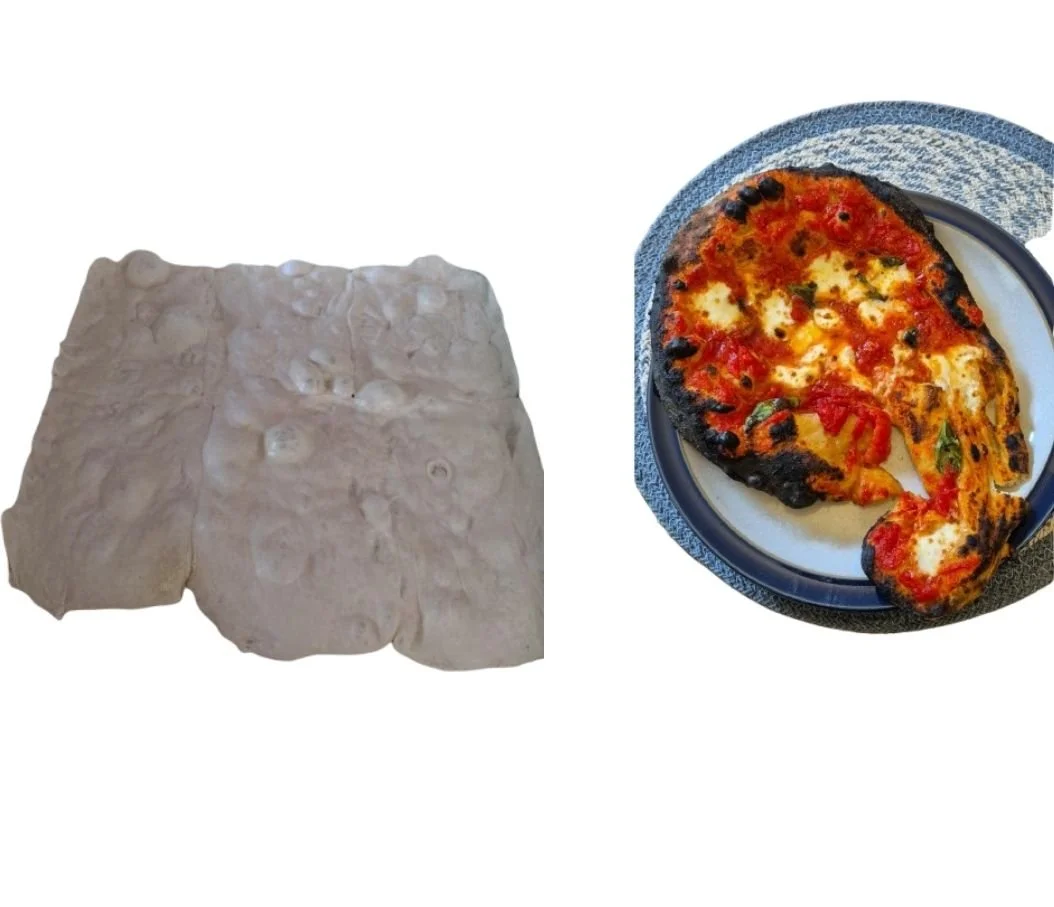
I baked this dough on purpose without mixing it all the way through
If the dough feels uneven and weak, work it gently — a couple of folds, or a few slap-and-folds — until it starts to gather into a ball and feel like one piece.
If it keeps falling apart, stop. Cover it, rest 30 minutes, then check again. A rest often accomplishes more than extra force. The proteins are still hydrating and the gluten is still forming — you just can't see it happening.
If it's essentially liquid and won't hold any shape at all, that's a different problem. It's too wet for that flour right now. Add flour slowly, in small amounts, until it becomes workable. Under-mixing isn't the issue at that point.
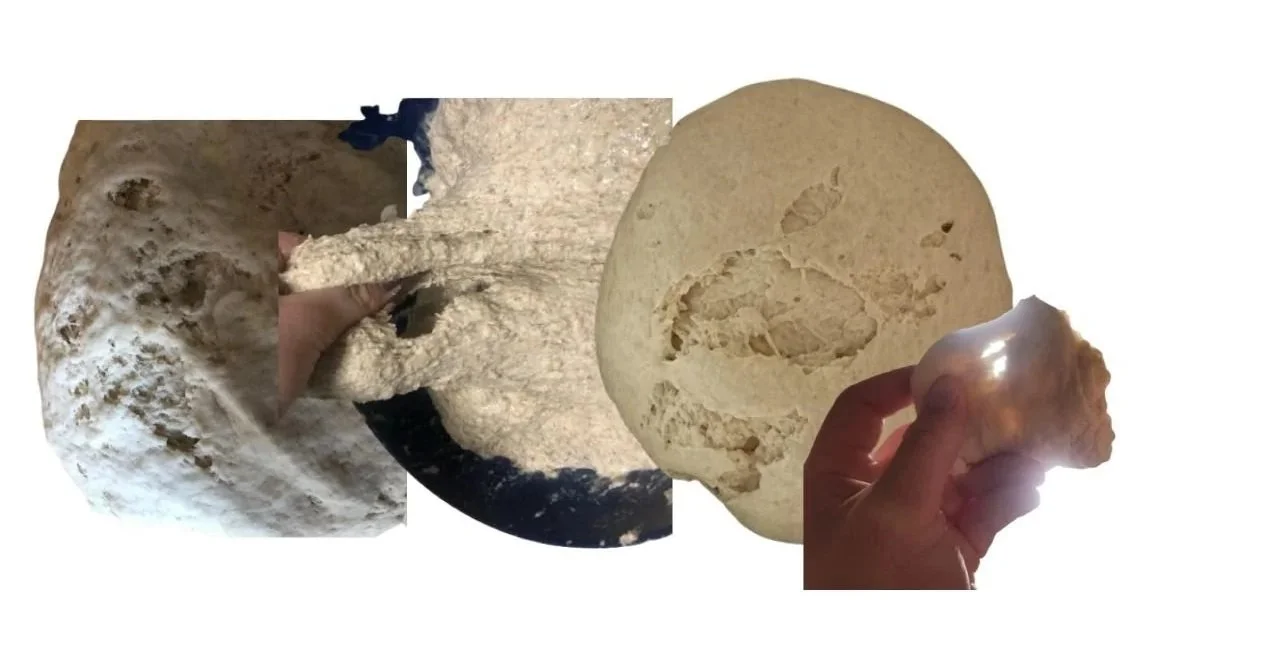
Overproofed dough — when fermentation goes too far
This is the other main reason pizza dough tears when stretching. It looks completely different from under-kneading at first glance — but the end result, tearing, is the same.
Fermentation is like a timer that never pauses. You can slow it down in the fridge. You can speed it up with warmth. But it's always running. Miss the window, and the dough doesn't just get more risen. It gets structurally weaker.
What overproofed dough looks like:
balls spread flat in the container — the "pancake" look
you poke it and the dent stays, no bounce
soft but not strong, like it lost its backbone
stickier than usual, smears when you handle it
tears in weak spots during stretching
bakes pale with weak rise and a bottom that won't crisp properly
Why it tears: after the dough peaks, fermentation keeps running. Enzymes and acidity gradually break down the protein and starch network. The gluten loses its ability to hold tension — so instead of stretching, it rips.
Why it bakes pale: fermentation consumes sugars. With fewer sugars left, there's less material for caramelization and the Maillard reaction. The crust stays light even when the pizza is fully baked through.
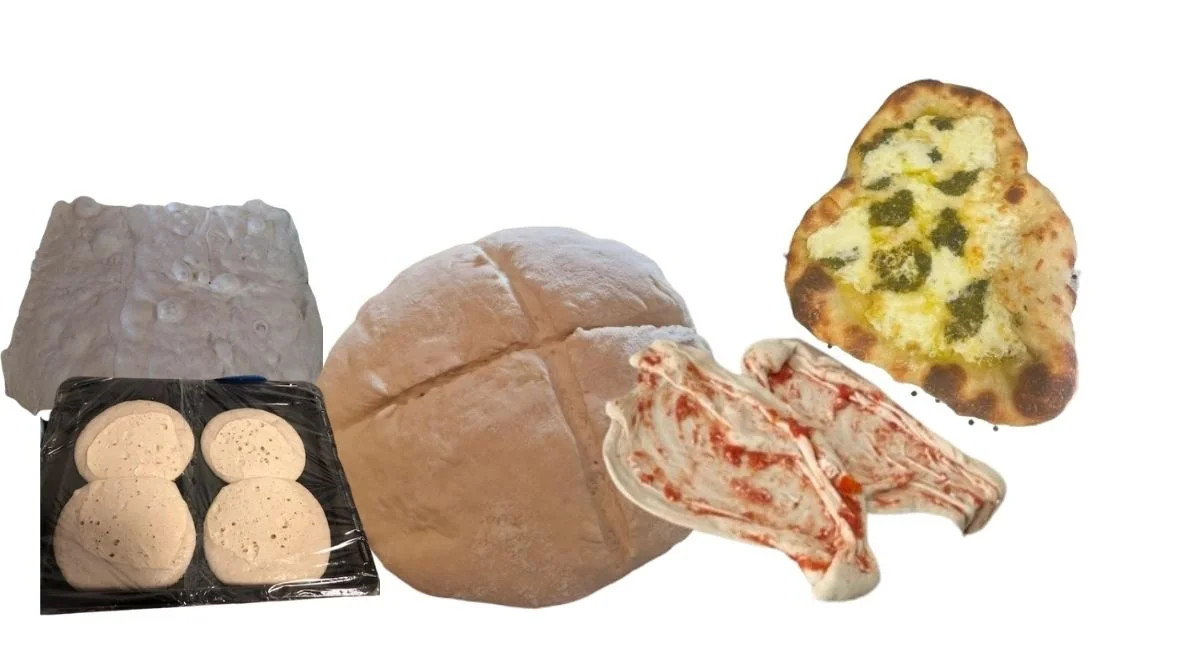
What speeds up fermentation (and shrinks your window)
Temperature — warmer room equals faster fermentation. This is the variable most people never think about, and it's usually the culprit.
Too much yeast — fermentation races early, then the structure collapses. I use 2.5 g of fresh cake yeast per 1 kg flour in winter and 1.5 g in summer. Fresh and instant yeast are not interchangeable — the amounts are completely different, don't swap them gram for gram.
Too long in the fridge — cold slows fermentation, it doesn't stop it. Dough can absolutely overferment in the refrigerator given enough time.
Whole grain or rye flour — coarse particles accelerate fermentation. Your window shrinks faster than it would with white flour.
High hydration + weak flour + long fermentation — this combination is where things go wrong most often. More on this below.
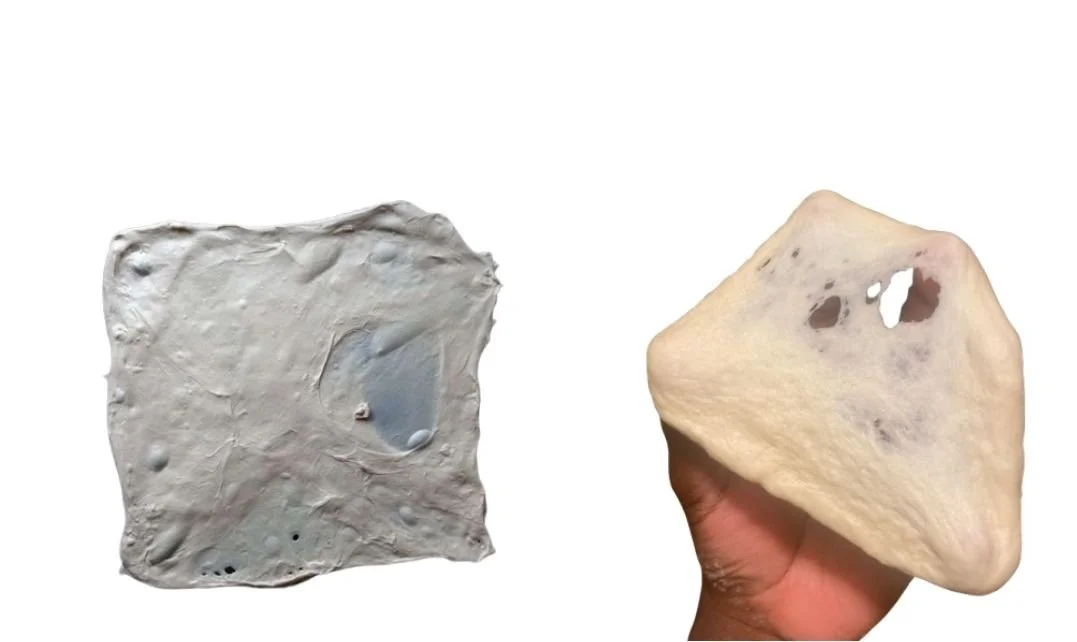
before / after
Wrong flour for your setup
This one took me a while to diagnose. My dough kept going slack and I couldn't figure out why — I was following the recipe exactly.
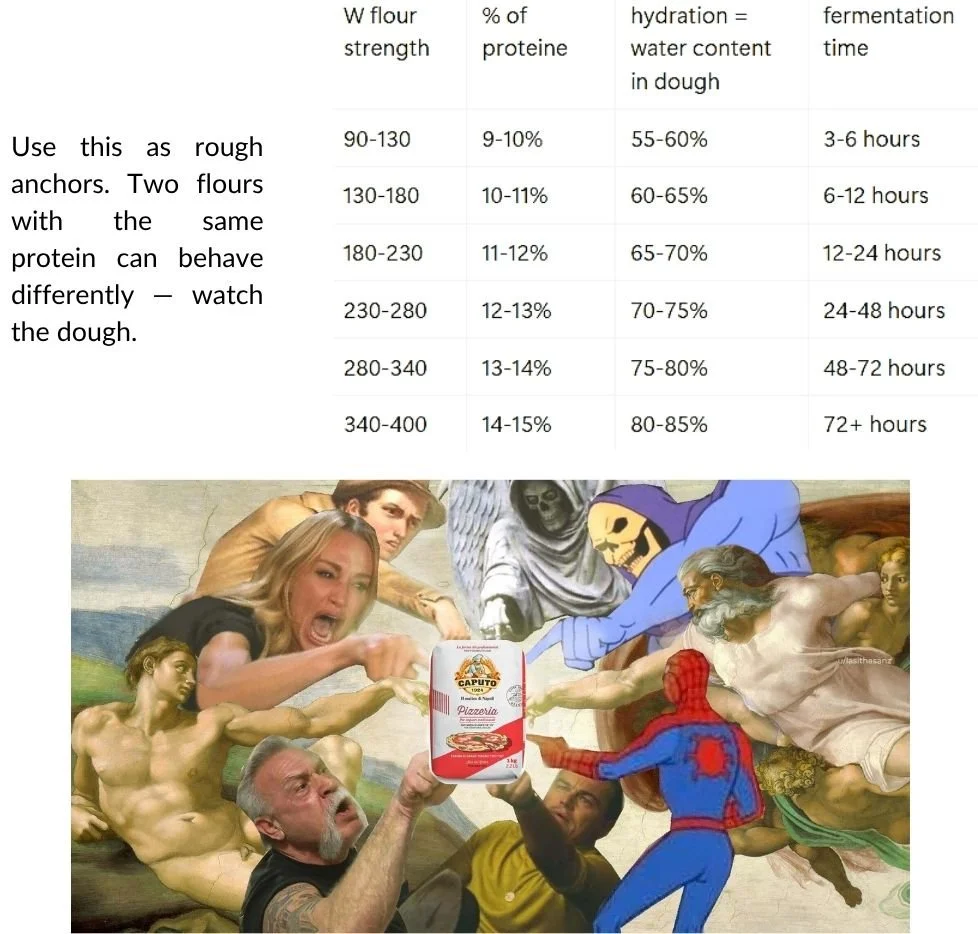
The problem: I was using Caputo Pizzeria (12.5% protein, listed as medium strength) with 75%+ hydration, a preferment (biga), and 48+ hours of cold fermentation. That flour hit its structural limit with that combination. The dough got sticky, stuck to the peel, and tore easily during stretching.
Protein percentage alone doesn't tell the full story. Two flours with identical protein percentages can behave very differently. The W value — a measure of flour strength — matters just as much. Use this table as rough orientation, not strict rules:
When the mixer damages the dough
By hand, it's genuinely hard to overmix wheat dough. With a stand mixer, especially with wet, high-hydration dough, it can happen in minutes.
Signs the mixer went too far:
dough was tightening up nicely, then turned looser, shinier, oddly slack
smears and tears instead of stretching cleanly
looks like it's getting wetter, sometimes water pools at the bottom of the bowl
won't form a clean ball no matter how long you keep mixing
The clearest warning sign is dough temperature. Around 25°C / 77°F, things start accelerating — especially with wetter dough. Around 30°C / 86°F, structural breakdown becomes very likely with powerful machines.
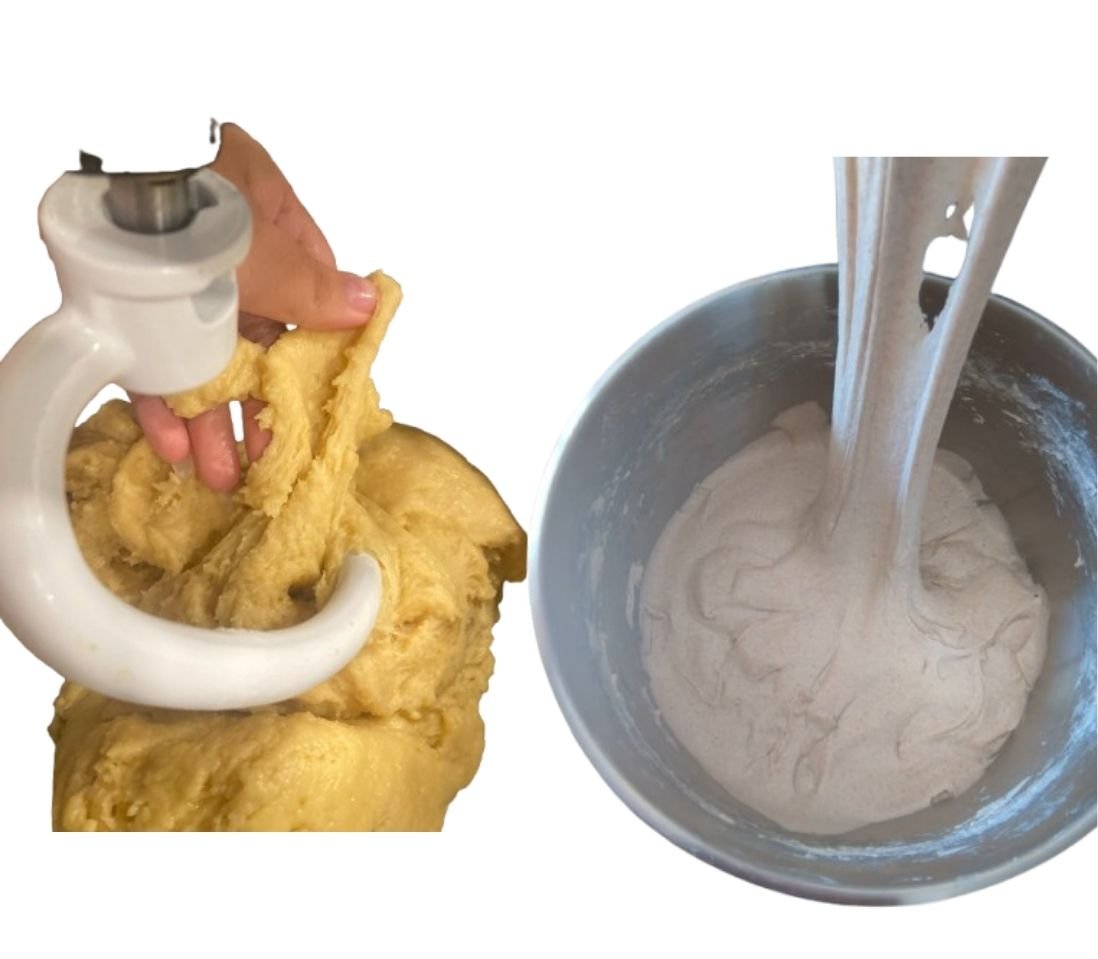
Undermixed vs overmixed — they can look similar at first:
Undermixed (structure not built yet):
still resists, then breaks
a rest usually improves it quickly
Overmixed / overheated (structure breaking down):
stretches without real resistance, almost crawls
surface shows quick tiny ripples or micro-tears
a rest won't bring it back
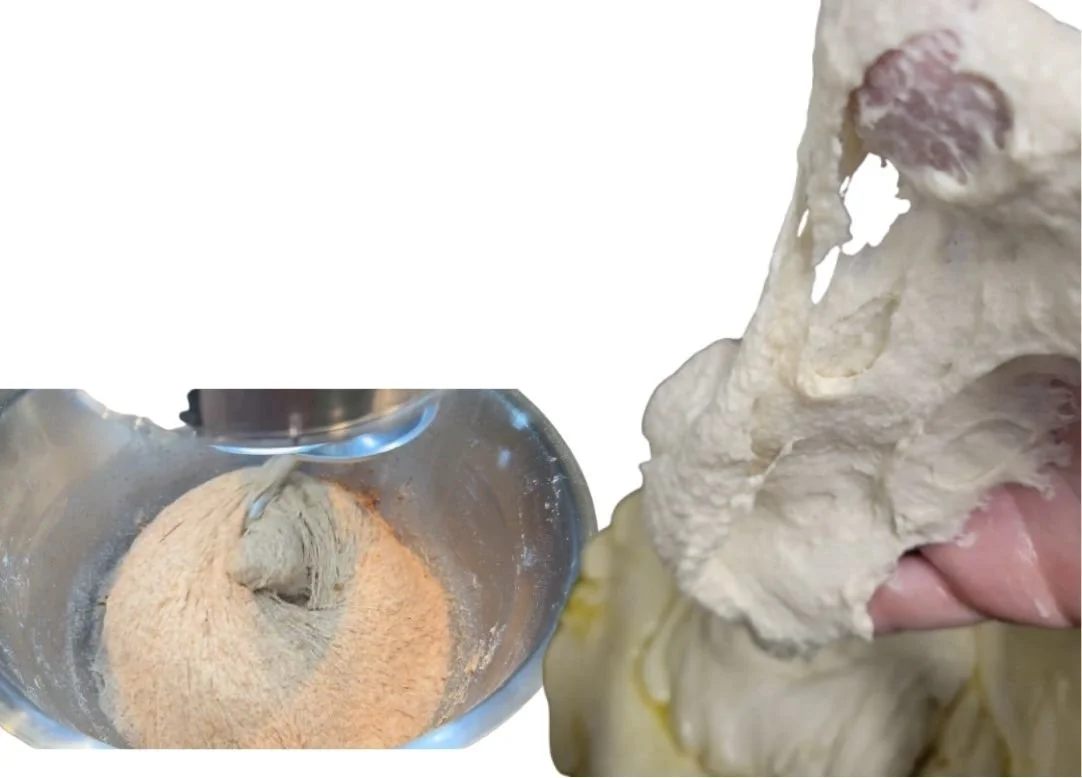
undermixed vs. overmixed
What to do right now:
Stop the mixer. More mixing almost never fixes overheating — it accelerates it.
Cool the dough in the fridge for 30–60 minutes.
Do 1–2 gentle folds during cooling to even out the temperature and rebuild some tension.
What to change next time:
Track dough temperature. If you don't have a thermometer, touch it — warm dough means you're close to the edge.
Use colder water when needed. In summer, sometimes ice water is the right call.
Don't overload the machine. More dough equals more friction equals more heat.
For high hydration dough, try bassinage (double hydration): mix to full strength with most of the water first, then add the remainder gradually once structure is established.
Rule of thumb: slightly undermixed dough can recover with rest and folds. Overmixed dough is much harder to salvage.
How to save overproofed dough right now
If it's only slightly over — still holds a ball:
Chill it: 20–40 minutes in the fridge to firm it up.
Bake sooner rather than waiting longer.
Or press the gas out, re-ball it, and let it proof again — sometimes that's enough to recover the structure.
If it's weak, sticky, and tearing:
Stop chasing thin. Go slightly thicker and handle it as little as possible.
Change the style: bake it as flatbread, pan pizza, or focaccia on parchment paper. It won't be what you planned, but it's not a wasted day.
If it's really gone — gluey, slack, won't hold shape at all:
Degas it, fold it up, refrigerate it, and use a portion as old dough in your next batch. Old dough adds flavor and complexity. Nothing goes to waste.
Next time, change one variable — yeast amount, dough temperature, or fridge time — and keep everything else identical. That's the only way to know what actually caused the problem.
The real issue: recipes don't transfer
Consistency came when I stopped copying timers and started reading the dough instead.
Classic example: a pizzaiolo on YouTube says "rise warm for 2 hours." His kitchen runs at 40°C (104°F). Yours is 22°C (72°F). His dough takes off fast — yours barely moves. You follow his timer and pull overproofed dough that tears apart the second it touches the peel.
"2 hours" is what worked in his specific conditions. Different kitchen temperature, different flour, different yeast amount — the number means nothing without context. Once you learn what ready dough actually looks and feels like, results stop being a guessing game.
FAQ
Why does my pizza dough keep tearing when I stretch it? Almost always one of four causes: gluten isn't developed enough (under-kneaded), the dough fermented too long (overproofed), the flour isn't strong enough for the hydration and timing, or the mixer overheated the dough. Check whether the dough feels tight and springy or soft and slack — that one observation tells you which direction to go.
How do I stop pizza dough from tearing? If it's tight and snaps back, it needs more rest — either more proofing time, or simply cover it and wait 20–30 minutes before trying again. If it's soft and tears in weak spots, it's likely overproofed — chill it, work slightly thicker, and handle it as little as possible.
Can you fix pizza dough that tears? Yes, depending on the cause. Under-kneaded dough responds well to more folds and rest time. Slightly overproofed dough can be chilled and used. Very overproofed dough can be degassed, re-balled, and added to your next batch as old dough. Overmixed dough is the hardest to rescue — stop immediately, cool the dough, and do gentle folds.
Why does my pizza dough tear in the middle? Middle tears usually point to weak spots — from uneven kneading, gas pockets that formed during proofing, or dough that's past its fermentation window. The center tends to be thinnest and most vulnerable. Work from the center outward, slowly, and don't force it if it pushes back.
Does pizza dough get easier to stretch with more proofing? Up to a point. Underproofed dough is tight and snaps back — more time helps. But over-proofing weakens the structure and makes tearing more likely, not less. The target is the zone between tight and slack: visible bubbles, slight give when pressed, no aggressive snapping back.
