
You can fix sticky dough without adding extra flour
When I first got my hands stuck in sticky dough, I wanted to throw it straight into the trash. Everything was a mess. My hands, my clothes, my hair — there were bits of dough everywhere. My boyfriend was annoyed that I had turned the kitchen upside down.
At that moment, you’ll probably want to do the same: throw it away or keep adding more flour. But then be ready for a dry, bready, chewy pizza instead of an airy crust with an open crumb and crisp texture.
So the important thing is to understand this first: is your dough truly weak and falling apart, or did you just not develop it enough yet?
Dough can feel sticky and still be strong, elastic, and fixable. You can feel that tension in it. It doesn’t cling to absolutely everything. On the other hand, dough can also feel sticky in a bad way — sticking to everything and leaving traces behind. That usually happens when:
the gluten was never developed properly,
the flour can’t handle that level of hydration,
you kneaded the dough in a mixer, it got too warm, and its structure started breaking down.
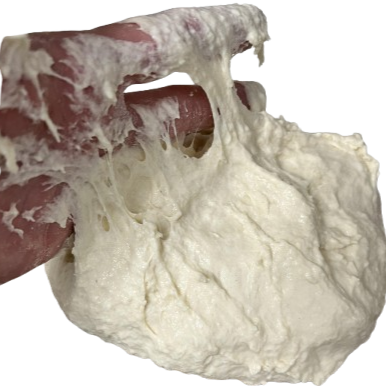
When sticky pizza dough is normal and when it’s a problem
Some stickiness is normal, especially once you start working with dough at 65–80% hydration and above. Hydration simply means how much water is in the dough compared to the flour.
Why use more water at all? Because more water helps you get a lighter, airier pizza instead of a dry one.
Many recipes are written for professional pizza ovens that reach around 400–500°C (750–930°F). Neapolitan pizza bakes there in about a minute, so the dough does not need as much water. In that case, 60–65% hydration can be enough.
But home ovens are different. Most of them do not go much above 250–270°C (480–520°F). The pizza stays inside longer, so more water evaporates during baking. That is why dough for a home oven often needs more water in it.
A normal high-hydration dough may feel sticky in the beginning, but it should gradually become smoother, more elastic, and stop sticking to everything around it. It should start holding itself together. It should resist your hands a bit instead of flowing like batter. It may still cling slightly, but it should not be slipping through your fingers.
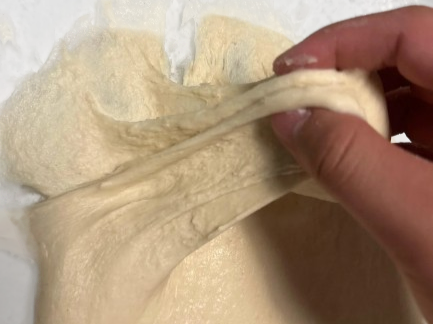
A weak dough is different. It stays runny, tears easily, spreads too fast, and feels impossible to gather into a ball even after proper kneading or resting. It may stick to everything, but without any strength underneath.
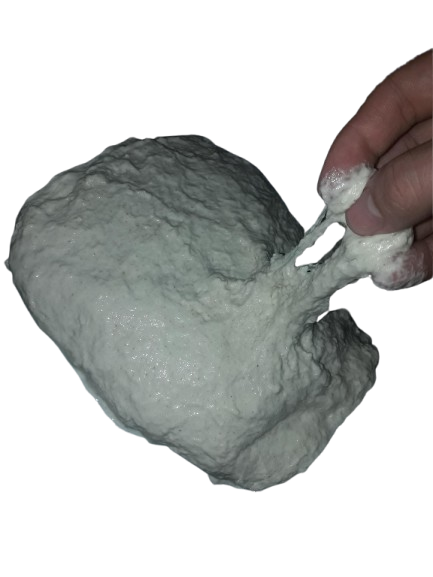
This is the moment when people panic too early. They judge the dough at its messiest stage, before the flour has fully absorbed the water, before the gluten has had time to organize, and before the dough has had a chance to calm down.
The 4 real reasons pizza dough gets too sticky
1. The gluten was never developed properly
This is the most common reason.
The moment you first mix flour and water, it is still too early to expect the dough to be strong, elastic, and smooth. It needs time and some mechanical work to build strength.
It needs more than just mixing the ingredients until they come together. The flour needs time to absorb the water. The proteins need time to hydrate and swell. The dough needs enough work to start building strength.
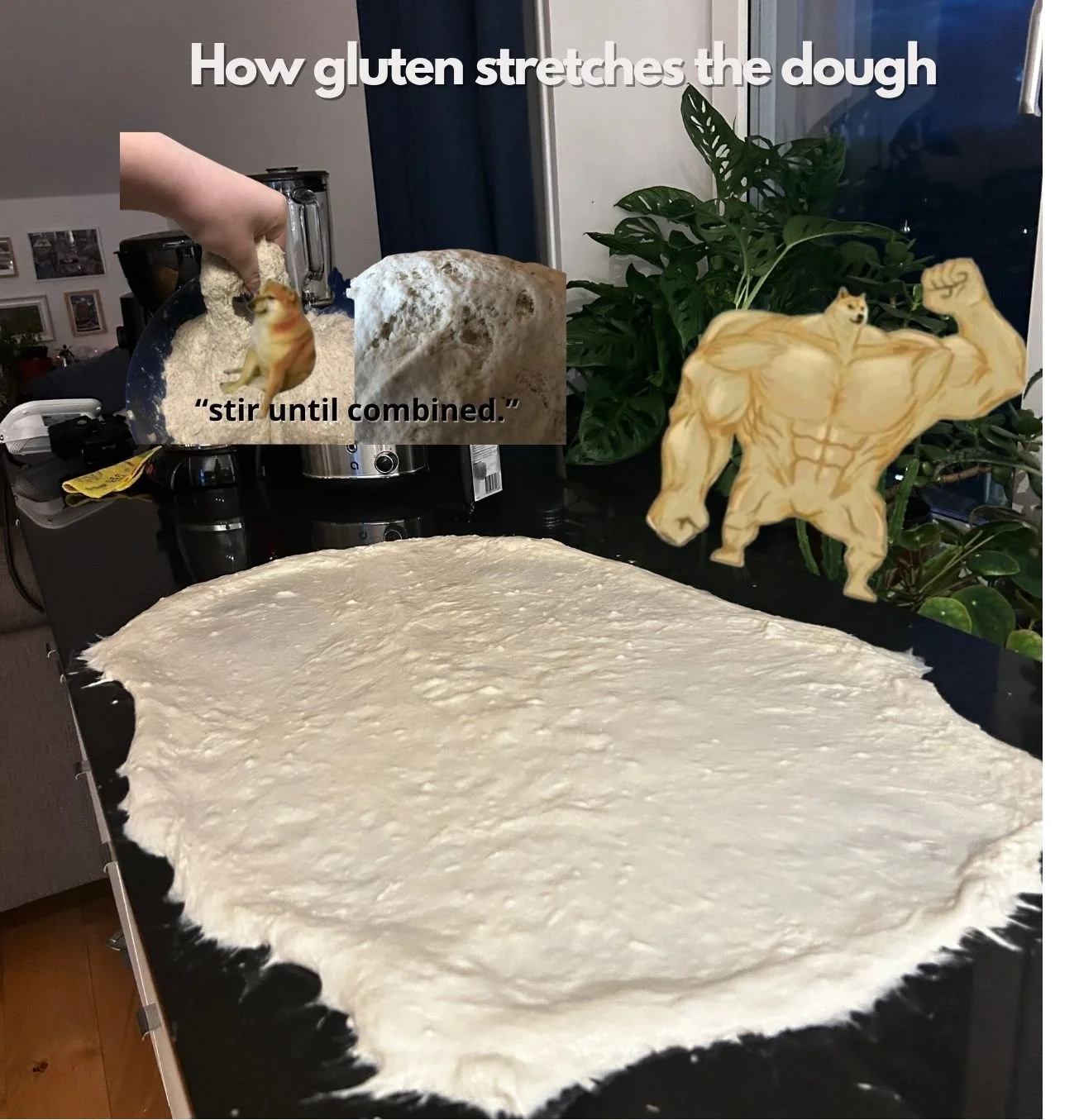
This is also why people get frustrated with the windowpane test. They expect the dough to stretch beautifully too early, but the dough is still disorganized. At that stage, you’ll want to add more flour. But more often, what it really needs is a bit more hand kneading and about 30 minutes of rest so the gluten can strengthen.
If you want to bake pizza your family will actually ask for again — I'm opening a live online workshop in 2026. We go deep on how everything works: fermentation, flour, dough behavior, heat. You'll understand the process well enough to bake your favorite pizza style consistently, in your own oven. Join the waitlist →
Want the full details first? See the full Online Pizza Workshop for Home Ovens
2. The dough got too warm while you were kneading it
Warm dough gets weak faster than most people realize.
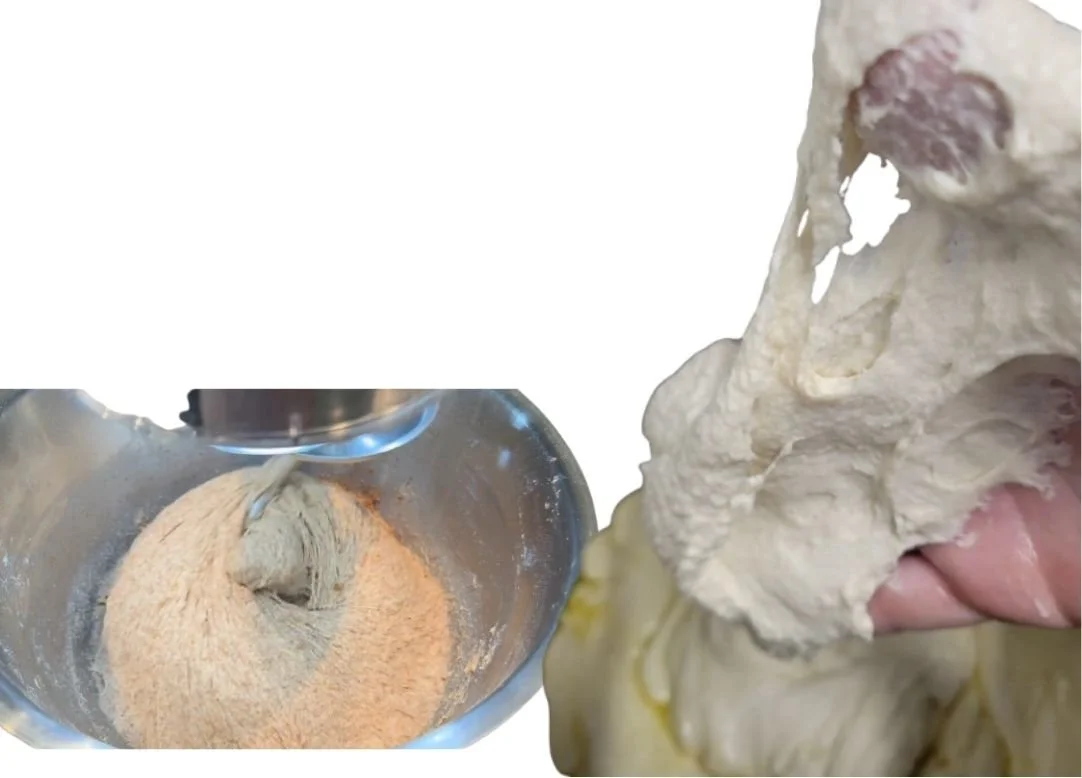
If you use warm water — around 40°C (104°F) — or run a mixer too hard for too long, the dough can start breaking down instead of getting stronger. It becomes sticky, softer in a bad way, and harder to gather. Instead of feeling elastic, it starts feeling loose and sloppy.
This happens especially often with dough hook mixers. The hook can heat the dough up and tear its structure instead of building strength. When I see that happening, I turn the mixer off and finish kneading by hand.
A mixer can overheat dough because the hook works fast and creates friction, and friction creates heat. Once the dough gets too warm, it stops getting stronger and starts falling apart instead. That’s when sticky dough gets worse: it turns slack, messy, and much harder to handle.
Ever since I started using a mixer, I’ve been chilling all the ingredients beforehand and even adding ice. I also check the temperature with a thermometer. If I see that the dough is around 23°C (73.4°F), I turn off the mixer and finish the job by hand or chill the dough in the refrigerator.
3. Your flour is too weak for that level of hydration
Not every flour can handle the same amount of water, even if the protein number on the bag looks decent.
You can see 12% protein and assume the flour must be strong enough. But protein percentage is not the whole story. A better clue is the flour’s W number. Think of W as how much water and pressure the flour can handle before the dough gives up. The higher the W, the stronger the flour usually is.
This also explains why flour can have a high protein number and still behave weakly.
Flour proteins are mostly made of two parts: gliadin and glutenin. Think of them like this: one part helps the dough stretch, and the other helps it hold itself together. You need both. If the balance is off, the dough may stretch easily but still not have enough strength to carry a lot of water.
That is why something like spelt flour can say 13% protein on the bag and still give you sticky, weak dough. It often stretches easily, but it does not always hold shape as well as you expect. On the other hand, Manitoba flour is much stronger. It can usually absorb more water and still keep the dough together. Cake flour is the opposite — it is too weak for pizza dough and cannot handle high hydration at all.
Flour also behaves differently from country to country. In the US, flour with 12% protein can often absorb much more water than flour with the same protein number in Europe. So if you copy an American recipe and use European flour, the dough may turn into sticky dough much faster than expected.
A few years ago, I tried baking an 80% hydration bread recipe from the US with Swedish flour. The dough kept spreading, and I kept adding more flour to save it, but it still turned into a flat loaf. In the end, I realized the problem was not me — the flour was simply too weak for that level of hydration.
So yes, sometimes your flour just does not have enough strength to hold that much water. If the flour is unfamiliar, start with less water and work your way up instead of trusting the recipe blindly.
What to do instead of adding more flour right away
1. Autolyse: Give the flour time to absorb the water
Sometimes sticky dough feels like a mess because the flour has not fully absorbed the water yet.
This is where autolyse method helps a lot. Mix the flour and water first and let it sit for 20–40 minutes before adding the remaining ingredients. That one pause can completely change how the dough feels. It usually needs less kneading, develops faster, and feels much less chaotic.
On the photo below, you can see the difference before and after autolyse.
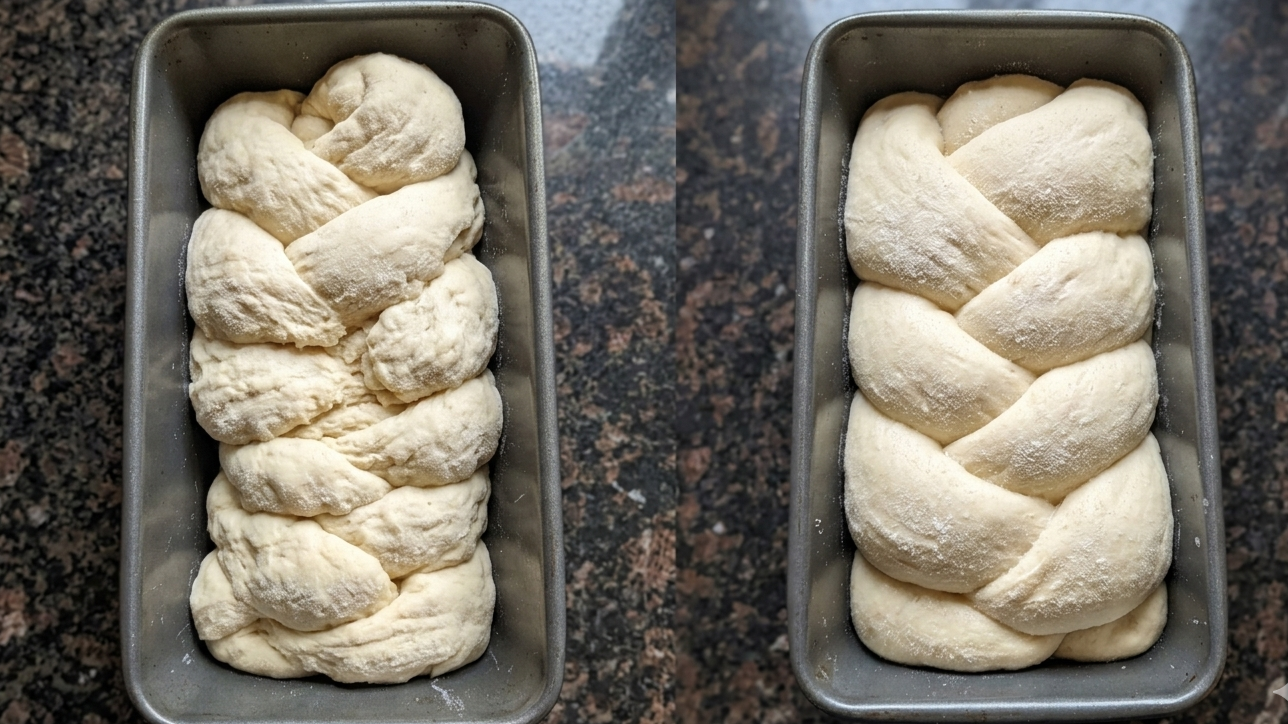
before and after autolyse
2. Double hydration: don’t add all the water at once
Use this method if you want to make wetter dough — 65% hydration and above. Or if you bought a new flour and you do not trust it yet.
Instead of adding all the water at once, start with about 80% of it.
Begin kneading with that smaller amount first and build some strength in the dough. Then gradually work in the remaining water once the dough already has some structure. It is much easier to manage wetter dough this way than dumping all the water in from the beginning and fighting a sticky mess.
Add the last part of the water together with the salt.
This works especially well because salt helps strengthen the dough. So first you mix the dough with about 80% of the water and all the other ingredients except salt and oil. Then you add the remaining 20% together with the salt. Salt not only strengthens the dough structure — it also helps the dough take in more water.
3. Don’t use aggressive mixing if it is making things worse
This mostly applies to mixers.
If you notice that your mixer is tearing the dough, overheating it, or the dough is not gathering around the hook, it is better to stop and finish by hand. In that case, the mixer is not helping anymore.
Use gentler methods like folds or slap and folds instead. And between them, give the dough time to rest — about 30 minutes at room temperature. Sometimes the dough fixes itself better during rest than during more force.
4. Keep the dough cool
If the dough is getting warm, you can make everything worse while trying to fix it.
This matters even more if you live in a hot country or mix dough in a stand mixer.
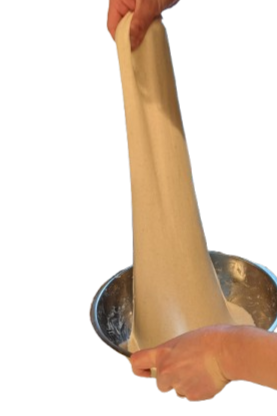
Use cool water. Sometimes you can use it together with ice. Watch the dough temperature with a thermometer. If it goes above 23°C (73.4°F), stop the mixer and either finish by hand or chill the dough in the fridge before continuing.
Warm dough gets weaker faster.
When adding flour is the right move — and when it ruins the dough
Sometimes adding flour is the right move.
If you tried everything and the dough is still slipping through your fingers, then yes — adding some flour may be the most practical correction. Sometimes the flour simply cannot handle that level of hydration. Sometimes the recipe looked fine on paper, but your flour behaved much weaker in real life.
If you understand baker’s percentages, don’t add flour blindly — calculate it. Let’s say your dough started at 70% hydration, which means 700 g of water for every 1000 g of flour. If you decide the dough would work better at 65%, divide the total water by 0.65 to see how much flour the dough should have in total. In this case, 700 ÷ 0.65 = 1077 g of total flour. That means you need to add about 77 g of flour. This is a much better correction than throwing in random handfuls and hoping for the best.
But a lot of people add flour too early.
They do it when the dough is still in its messiest stage — before the flour has fully absorbed the water, before the dough has had time to strengthen, and before it had a chance to calm down. At that point, adding flour may make the dough easier to handle for a moment, but it can also move you further away from the pizza you actually wanted.
For home ovens, dough that is too dry creates its own problems. It bakes up denser. It loses that lighter, more open texture people want. It can turn dull, tight, and even a little rubbery. So yes, extra flour can make sticky dough feel safer in the moment — but it can also quietly ruin the final result.
My rule is simple: if the dough is still gaining strength, don’t rush to add flour. If it is becoming smoother, holding itself together better, and feeling more elastic with time, then the answer is probably not more flour.
But if the dough stays runny, weak, and impossible to manage even after proper kneading, rest, folds, and temperature control, then lowering the hydration may be the smarter move.
If you want to bake pizza your family will ask for again — join to my live online workshop in 2026. We go deep on how everything works: fermentation, flour, dough behavior, heat. You'll understand the process well enough to bake your favorite pizza style consistently, in your own oven. Join the waitlist →
Want the full details first? See the full Online Pizza Workshop for Home Ovens
