
How to Get Fluffy Pizza Dough at Home (No Pizza Oven Required)

You followed the recipe and watched the video. You did everything it said — and the crust still came out dense, bready, and kind of disappointing.
The recipe wasn't the problem. Most online pizza recipes are fine. What kills fluffy pizza dough at home is process — four specific things that recipes almost never explain properly.
Fix those four things, and a regular home oven can produce a crust that's genuinely light, airy, and blistered. No wood-fired oven, no professional equipment.

1. Hydration: use more water than feels comfortable
Dry dough bakes into a dry, dense crust. It's physics.
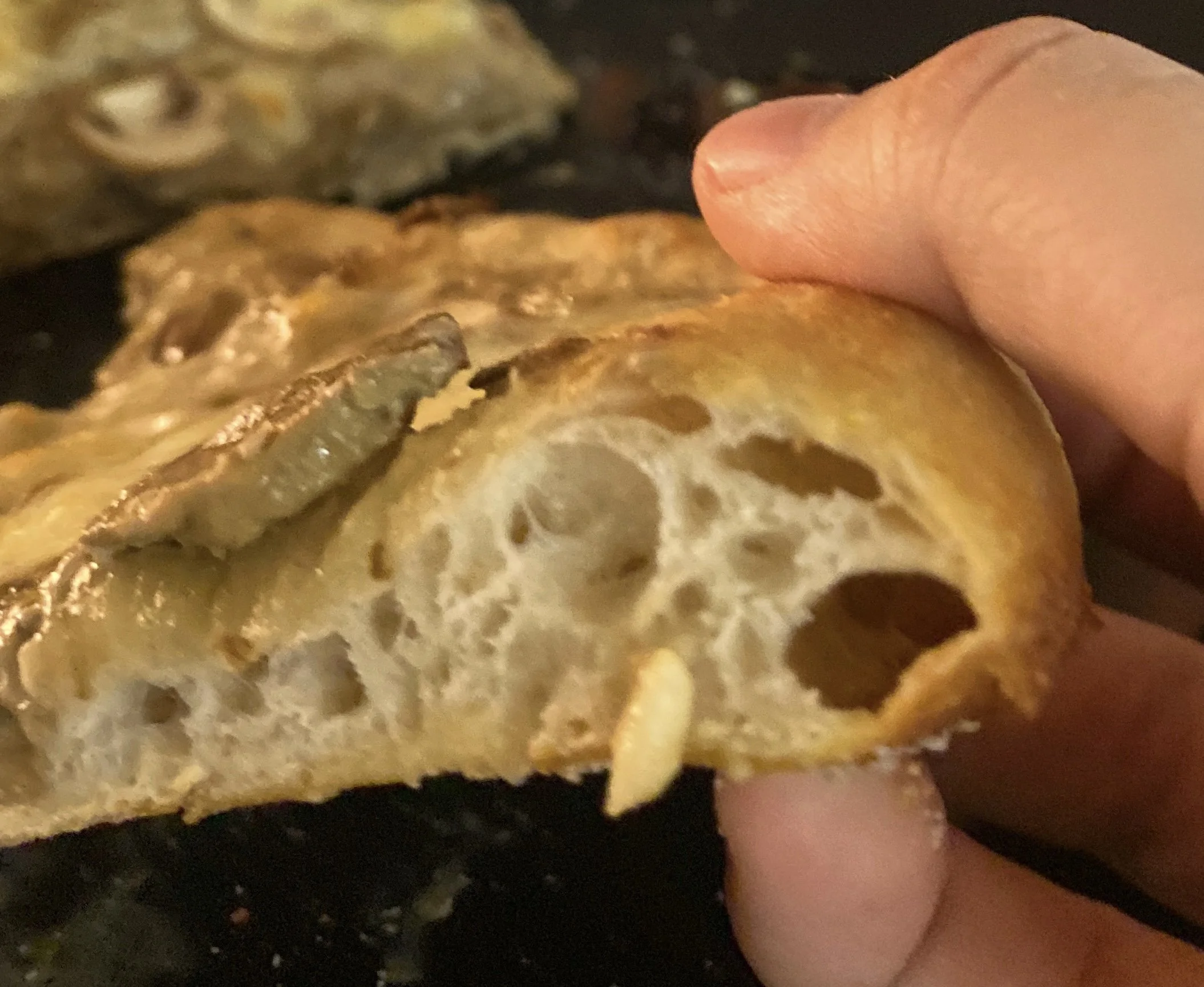
For a fluffy pizza dough with an open, airy crumb, you need more water than most recipes suggest. Bakers measure this as hydration: the weight of water as a percentage of flour weight.
Wood-fired oven (~500°C / 930°F): 60–65% hydration works fine. The bake is so fast the dough stays moist inside.
Home oven (250–300°C / 480–570°F): you need higher hydration — 65–70% or more. That's roughly 700g water per 1kg flour.
At 60% hydration in a home oven, the dough loses moisture before the crust can properly set. The result is stiff and dry. At 70%, the extra water protects against over-drying and creates the bigger internal bubbles that give you that airy, almost pillowy texture inside.
More water = open crumb. Low hydration = tight, bready crumb. That relationship is consistent.
If you want to bake pizza your family will actually ask for again — I'm opening a live online workshop in May 2026. We go deep on how everything works: fermentation, flour, dough behavior, heat. You'll understand the process well enough to bake your favorite pizza style consistently, in your own oven. Join the waitlist →
Want the full details first? See the full Online Pizza Workshop for Home Ovens

The catch: all-purpose flour can't handle higher hydration. It turns sticky, tears when you try to stretch it, and feels completely unmanageable. For fluffy pizza dough that actually works at 65–70%, you need:
00 flour — finely milled Italian flour, usually around 12% protein
Strong bread flour — 12–13% protein
Both absorb more water without collapsing, which is what allows the dough to trap air and gives the crust room to balloon in the oven.
One thing worth knowing: not all 00 flours are the same strength. A 00 bag in Italy with W300 handles 70% hydration with no problem. A 00 bag in the US with W180 might turn into a sticky puddle at the same hydration. Always check the protein percentage if W isn't listed, and be prepared to experiment with a new bag.

2. Ferment with your eyes, not the clock
"Ferment for 2 hours" is one of the most misleading instructions in pizza baking — because fermentation speed depends entirely on temperature, flour type, and how much yeast you used.
In a warm kitchen in Naples, dough might double in 2 hours. In a cool Scandinavian apartment, the same exact recipe might take 6 hours to reach the same point. Copy the timer without accounting for that difference and you get underfermented dough — dense, gray, heavy crust that never really came alive.
The fix is simple: use a clear container and watch the dough instead of the clock.
Your fluffy pizza dough is ready when:
Bubbles are visible throughout, not just on the surface
A gentle shake makes the dough jiggle slowly — it should feel alive, not solid
A finger pressed into the surface meets soft air underneath and the mark bounces back gradually
Too early and the crust bakes dense. Too late and the dough collapses, gets sticky, loses its structure, and bakes flat and pale because fermentation has consumed most of the available sugars.
I press the side of the container and watch what happens underneath the surface. If the dough "breathes" — bubbles shifting, slight movement — it's ready. If it feels like a solid block, it needs more time.

3. Real heat, not just hot air
Home ovens max out around 250°C (480°F). That's enough to cook the pizza through, but not enough to brown the base properly — because air alone can't crisp dough the way contact heat can.
This is where a pizza steel (or stone) makes a real difference.
Steel stores significantly more heat than oven air. When you slide the dough onto it, heat transfers immediately — similar to what the floor of a pizzeria oven does. The base crisps and blisters within minutes instead of sitting there slowly drying out.
The difference is dramatic. I once baked the same dough twice — on a preheated steel at 270°C / 520°F, and on a regular baking tray. On the steel, the crust puffed visibly in about 6 minutes with leopard spots on the bottom. On the tray, it stayed pale and floppy despite being technically "cooked."
If you want genuinely fluffy pizza dough results from a home oven, a baking steel is the single most impactful upgrade you can make. A heavy cast-iron pan and broiler combination is a solid alternative if you're not ready to invest.
Always preheat the steel or stone for at least 45–60 minutes. The oven might say it's at temperature in 15 minutes — the steel isn't.

4. Flour strength: the W factor
Flour isn't just a category — strength matters enormously. Bakers measure this with the W value, which indicates how much gas the dough can trap before the gluten network breaks down.
W250–W320: strong flour, well-suited for pizza, handles longer fermentation and higher hydration
W180–W200: weaker flour, collapses with high hydration, better for shorter timelines
If the bag doesn't list a W value — and most bags outside Italy don't — use protein percentage as a proxy:
12–13% protein ≈ strong flour
9–11% protein ≈ weaker flour, needs lower hydration and shorter fermentation
A W180 flour at 65% hydration can spread into a sticky pancake that won't hold shape. A W300 flour at the same hydration stays elastic, traps bubbles, and gives you a tall, airy crust with visible structure when you pull it apart.
This is why flour choice and hydration need to be matched — they're not independent decisions.

The mistakes that make pizza dense (and how to avoid them)
Most dense home pizza crusts trace back to one of these:
Low hydration. A 55% dough is easy to handle — and bakes into something closer to bread than pizza. Aim for at least 65%, ideally 68–70% once you're comfortable with wetter dough.
Weak flour. All-purpose with 10% protein collapses in the oven and can't trap enough gas for a proper rise. Stronger flour holds the structure you built during fermentation.
Over-proofing. Waiting too long past the fermentation window and the dough deflates, sticks, and bakes flat. The bubbles you built collapse. Learn to read the dough and you avoid this entirely.
Cold bake. Baking at 220°C / 430°F dries the crust out before it has a chance to lift. Always use your oven's maximum setting and preheat properly.
No steel or stone. Baking on a tray gives you pale, chewy base — the tray doesn't store enough heat to transfer quickly. Contact heat is what makes the bottom crisp and gives the rim room to puff.
Fix these five things and the difference in your pizza is immediate. Not subtle — immediate.

The short version
Fluffy pizza dough at home comes down to four things:
Hydration — go higher than feels comfortable, at least 65–70%
Fermentation — watch the dough, not the clock; bubbles and jiggle tell you more than any timer
Flour strength — match protein and W value to your hydration and fermentation timeline
Heat — preheat properly and bake on steel, stone, or cast iron, not a tray
None of these require a professional oven or special equipment. They require understanding what the dough is actually doing and why.
FAQ
Why is my homemade pizza crust dense? Almost always one of three things: hydration too low, flour too weak, or fermentation cut short. Use 65–70% hydration, bread flour or 00 flour with 12%+ protein, and ferment until the dough is visibly bubbly and jiggles when you shake the container.
What hydration gives the most airy pizza crust? 65–75% hydration. At 70%, the dough is sticky and needs stronger flour to handle it — but the open crumb and oven spring are noticeably better than lower hydration dough.
Which flour is best for fluffy pizza dough? Bread flour (12–13% protein) gives a chewier, structured result that holds up well in longer bakes. 00 flour (~12%) tends to balance airy and crisp. Both work well — the key is avoiding all-purpose flour for anything above 65% hydration or longer fermentation.
Is a pizza steel actually worth it? Yes, noticeably. Steel transfers heat to the dough much faster than a tray or even a stone, which gives you that quick bottom crispness and visible oven spring. It's the single most impactful piece of equipment for home pizza baking.
Can I make fluffy pizza dough without a pizza oven? Completely. A regular home oven at maximum temperature, a preheated steel or heavy pan, and properly fermented dough at the right hydration will give you genuinely light and airy results. The oven type matters less than people think — process matters more.
